
Your partner
in urogenital
preclinical research


Therapeutic Areas

Urology
A wide range of preclinical models of urological diseases.

Nephrology
An expertise on preclinical models for kidney pathologies

Oncology
From cells and organoids to human tumors-xenografts models.

Gynecology
A wide range of preclinical models of gynecological diseases.

Andrology
A wide range of preclinical models of males diseases.

Gastroenterology
An expertise on major gastrointestinal diseases.
Our
Platform
Our Platform
With an optimized platform and a pharmaceutical industry level of quality, Urosphere’s Platform offers more than 20 years of expertise and know-how in preclinical drug development through its in vivo and in vitro models.

News & Publications
News &
Publications
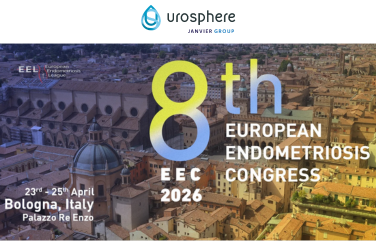
Urosphere at EEC 2026 – Advancing Endometriosis Research
Urosphere will be attending the Endometriosis and Endometrium Congress (EEC) 2026, where our team will present how our innovative preclinical models and services support the evaluation of new therapeutic strategies in endometriosis research. Poster #57:Aubry A. et al. An Integrated Platform using Human Endometriosis Spheroids and Animal Models for Evaluating New Therapeutics From 23 to 25 April 2026 in Bologna, Italy For more information about Urosphere or to schedule a meeting, please contact...

Meet Urosphere at AACR Annual Meeting 2026
Urosphere will be attending the AACR Annual Meeting 2026, taking place April 17–22, 2026, in San Diego, CA. Our team looks forward to meeting you at Booth #5036, where experts from both Urosphere and XenTech will be available to showcase how our complementary expertise in patient-derived xenografts (PDX) and organoid models supports translational oncology research and accelerates preclinical decision-making. As sister companies, Urosphere and XenTech will be joining forces during the meeting....

Urosphere will present at the Fertility Conference.
Our team will be present at Fertility 2026 to share how our latest preclinical services and models can help accelerate your research programs. Poster #217:Tardy C. et al. Comparison of Two Mouse Models of Male Infertility, with Chemical or Thermal Induction From 07 to 10 January 2026 in Edinburgh, Scotland For more information about Urosphere, please contact us
Research &
Development
Research & Development

Our Partners


Our Company
As a member of the drug discovery value chain, Urosphere can support your project. Our experts and platforms are dedicated to meeting your needs. Our aim is to understand your challenges and objectives to develop customized solutions together.